

Brainspotting Therapy, Online
Offered virtually in California, D.C., Virginia, Maryland, Texas and Illinois.
"Where you look affects how you feel"-David Grand, PhD
Does Brainspotting work online?
Yes — Brainspotting translates to video unusually well, because the method runs on your visual field and a fixed gaze point, which a screen provides naturally. In an online session at Soul Works Healing, we find your brainspot using a pointer on the screen or your own gaze, with the same attunement as an in-person session.
There's a quieter advantage, too. You process in your own space — a room your nervous system already knows, with your own blanket and your own tea. For deep processing work, familiar ground is a resource, and nobody has to hold it together in a waiting room afterward.
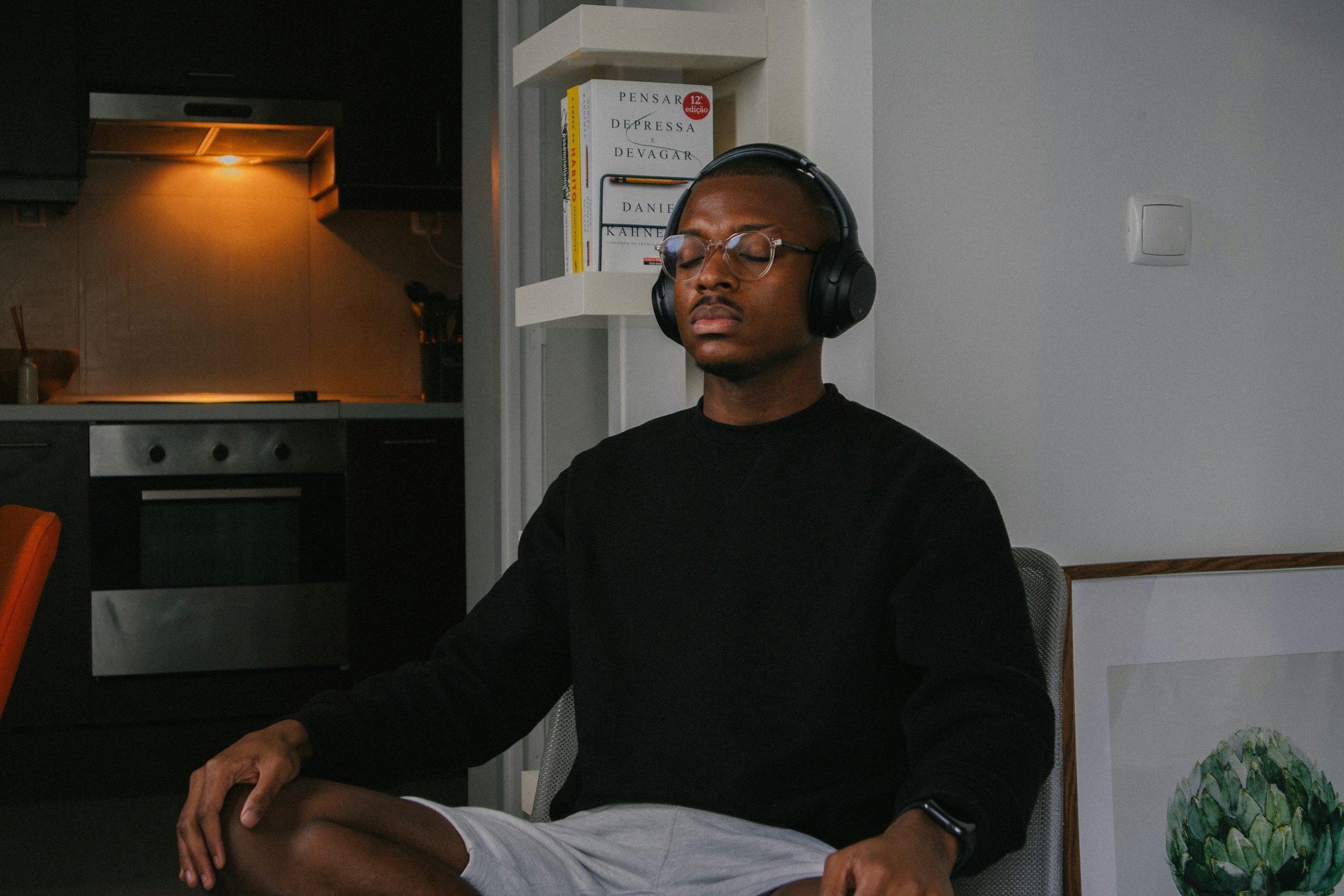
If we use bilateral sound, you'll want headphones. That's the entire equipment list.
What a session actually looks like
We don't start with processing; we start with a relationship. In the initial phase, we build trust and I walk you through the brain science, so nothing about the method feels like a magic trick being done to you.
Then we identify the brainspot together — a memory, a sensation, a thought that carries charge — and find whether an "inside window," "outside window," resource spot, or gaze spot serves you best. Processing happens at your pace, with me checking in as a co-regulating anchor and keeping you out of circular thinking. You're in charge of the speed the entire time.
We end every session by debriefing — organizing what came up through words, movement, or creativity until your activation settles. You leave regulated, not raw.
Some of what you carry doesn't answer to logic. You've told the story, understood the story, even made peace with the story — and your body didn't get the memo. The panic still fires. The flinch is still there.
Brainspotting is a brain-body therapy that uses your visual field, the places your eyes naturally rest, to reach what got stored without words. I'm Logan Brantley, a licensed clinical social worker with accredited Brainspotting training, and I offer it entirely online at Soul Works Healing, with clients in California, Illinois, Texas, Virginia, Maryland, and Washington, D.C.
What is Brainspotting?
Brainspotting is a body-based therapy developed by psychologist David Grand in 2003. It rests on a simple observation: where you look affects how you feel. By finding the eye position connected to something unprocessed — a memory, a panic, a stuck point — we give your brain access to material that talk alone can circle for years.
What the heck is a "brainspot"? Fair question. It's an eye position that correlates with activation in your body — hold your gaze there, and the deeper parts of the brain begin processing what they've been holding. Less narrating, more noticing. My job is to be a steady, co-regulating anchor while your system does what it already knows how to do.
You'll find real neuroscience underneath this — Brainspotting works with the subcortical brain, where trauma and survival responses live. And you'll find room for everything that doesn't come in words, because that's usually where the stuck material is.
What Brainspotting helps with
I use Brainspotting for trauma and post-traumatic stress, anxiety and panic, sexual assault recovery, and the stuck points that insight alone hasn't been able to shift — the pattern you can name perfectly and still can't stop. It pairs especially well with the rest of my work: expressive arts and somatic parts-work, inside an ongoing relationship.
That's worth saying plainly: Brainspotting here isn't a standalone technique. It's one language in a larger conversation between you, your body, and your story.
It can be, and it’s important to be honest about that. Brainspotting reaches real material, and activation during processing is part of how it works. That's exactly why we build resources and stabilization first, why I stay closely attuned throughout, and why you set the pace and can pause at any point.
The goal is processing, never re-living. If your history includes complex trauma or dissociation, we go slower, with more scaffolding. My door is not a fast lane.
Is Brainspotting intense?
I completed Levels 1 and 2 of Brainspotting training under Georgiana Mora, LCSW, and completed Phase 1 accredited training with Awaken Consulting Services in January 2026. Brainspotting sits alongside expressive arts therapy and somatic parts-work as one of the core modalities of my practice, and I use it weekly with trauma, anxiety, and panic.
I also teach graduate clinicians as adjunct faculty at Bastyr University in mind-body coursework — so if you want the fuller neuroscience behind your own session, ask. I love that question.
About my experience with Brainspotting


Questions people ask about online Brainspotting
-
Yes. The method needs your visual field, a gaze point, and an attuned therapist — a video session provides all three. We use an on-screen pointer or your natural gaze to find the spot, and headphones if we add bilateral sound. Many clients find processing at home gentler than processing in an office.
-
They're related! David Grand developed Brainspotting out of his EMDR practice, but they run differently. EMDR follows a structured protocol with moving eyes; Brainspotting holds a fixed gaze and follows your system's own pace, with more room for attunement. I practice Brainspotting because that flexibility fits how I work: relational, body-led, unhurried.
-
Like many types of therapy, it varies. Some people feel a shift in a single session; complex or layered trauma unfolds over months. I don't promise timelines, because your nervous system doesn't take orders. What I can promise is a resourced pace and a clear sense, together, of whether it's working.
-
I see clients over secure video in California, Illinois, Texas, Virginia, Maryland, and Washington, D.C. Sessions are $160, $200, or $250 on my equitable three-tier model — you choose what's sustainable. Superbills provided; I partner with Thrizer. The first 20-minute consultation is free.
-
A free 20-minute video consultation is enough to ask your questions, hear how I'd approach what you're carrying, and decide nothing under pressure.