Expressive Arts Therapy
Some of what you carry has never been said out loud. It’s not because you're avoiding it, but because it doesn't live in words.
About Expressive Arts TherapyExpressive is a multi-modal approach that uses image, movement, sound, and writing to process what talk alone can't reach, and at Soul Works Healing I practice it entirely over video, with adults and older teens in California, Illinois, Texas, Virginia, Maryland, and Washington, D.C. I'm a doctoral-trained expressive arts therapist, and an artist — and no, you don't have to be one.
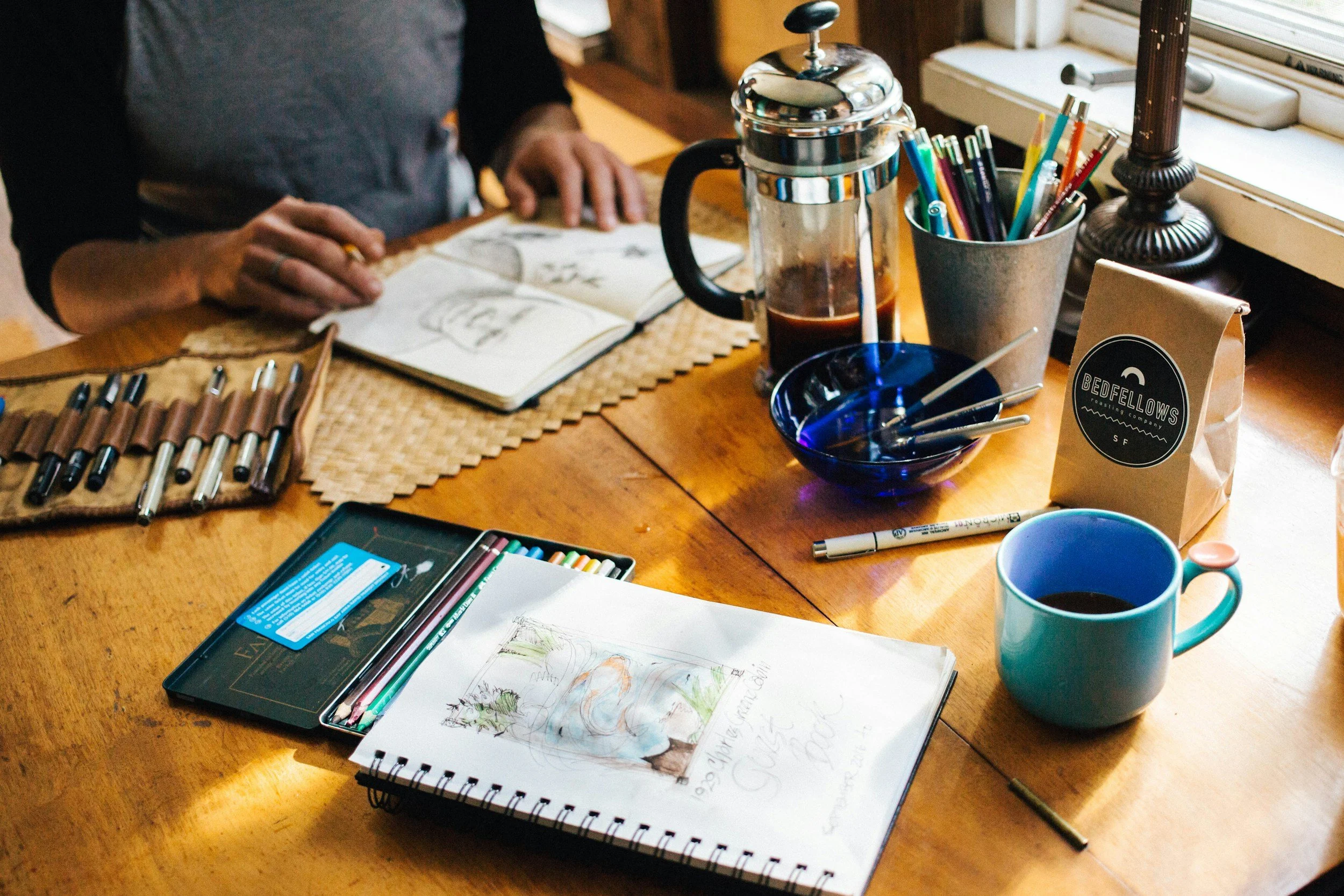
Expressive arts therapy uses the creative process itself — making an image, moving, writing, working with metaphor — as the language of therapy. The insight isn't decoration: parts of your experience are stored without words, especially anything that happened under stress, and those parts can't be reached by conversation alone. The art gives them a voice that doesn't require translation.
People sometimes ask how it differs from art therapy. Art therapy generally goes deep in one medium, most often visual art. Expressive arts moves between modalities — we might start with an image, follow it into movement, land in a few written lines — because the process leads and we follow. That intermodal freedom is the point, and it's what I trained in at the doctoral level.
And to be clear about what this isn't: this isn't just intuition dressed up as therapy. You'll find real neuroscience here. I teach the mind-body connection to graduate clinicians — and you'll find room for the parts of healing that don't come in words. Both, deliberately.
What is expressive arts therapy?
Do I have to be good at art?
No, and this question is the biggest reason people who would love this work never try it. The product doesn't matter; the process does. A wobbly line drawn with your full attention holds more therapeutic material than a beautiful painting made on autopilot. Stick figures are welcome here. So is scribbling, tearing the paper, and deciding the assignment is wrong and doing something else.
Nobody grades anything. Often nobody even interprets anything — you're the expert on your own image, and my job is to help you listen to it, not to tell you what it means.

Concretely: you need almost nothing. A pencil and paper count. Whatever you have counts. Most clients end up with a small basket of materials they like, but plenty of deep work has happened with a ballpoint pen.
A session might begin with talk and then shift when words start circling: I'll invite you to put the stuck thing on paper, or find the gesture that goes with it, or write for three minutes without stopping. Sometimes the camera watches your hands instead of your face, and for a lot of people that's exactly the relief that lets the real material out. Then we harvest — we look at what showed up together, and you say what it knows that you didn't.
Being in your own space helps this work more than almost any other kind of therapy. Your materials are your own. Your floor is available for big paper. And what you make stays with you, in your world, where it keeps working between sessions.
What a session is actually like, over video
Expressive arts therapy for trauma
In my practice, expressive arts rarely works alone: it's woven with Brainspotting, somatic parts-work, and guided imagery, inside a four-stage arc that builds safety before it builds anything else. We never make art about the worst thing as an opening move. We build resources, and images strong enough to hold onto, first. The art is a door you open at your own speed — and you can close it, which is exactly what makes it safer than words for many people. And making something is itself an act of agency — authorship practiced small, until it scales to a life.
Trauma is the place this approach earns its keep. What happened to you was recorded in more channels than language — in image, in body posture, in the startle, in the parts of the brain that don't take dictation. Recovery that only runs on language leaves those channels holding their original recordings.
Therapy for trauma and anxietyIs expressive arts therapy evidence-based?
The research base is younger and smaller than CBT's. What exists is promising — creative arts therapies show meaningful results for trauma symptoms, anxiety, and mood, and the neuroscience of why non-verbal processing matters is solid and growing. In my practice it's also never a solo act: it works alongside established approaches, inside a relationship, with a clinician trained to the doctoral level in when to use which.
About my training
(and the art on this website)
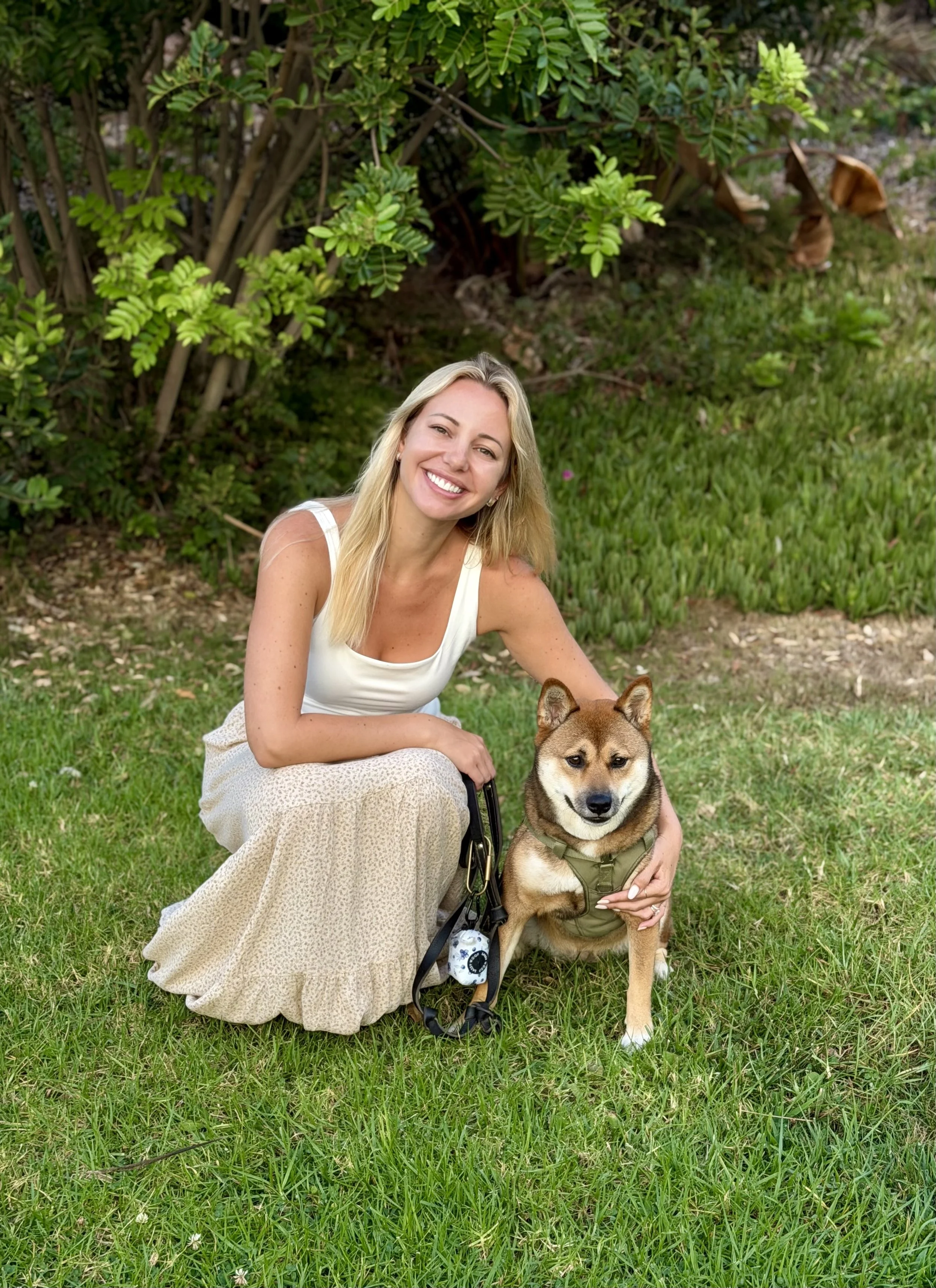
I'm an artist as well as a therapist. The panther, the fawn, and the bird you'll see around this site are mine — I drew them, and they mean something about how I see this work: the power, the startle, and the song, all in one nervous system.
The formal path: doctoral study in Expressive Arts Leadership at The European Graduate School — where the field itself was shaped — with the qualifying phase complete; the K Module at the Expressive Arts Institute in San Diego; and two years co-developing expressive arts programming for families at The Chrysalis.
When I say we'll be co-artists in this work, I mean it literally. I make things too. I know how it feels from your side of the paper.
Questions people ask
-
They were never separate here. Every session includes talk; the arts enter when they're useful and step back when they're not. You will never be forced to make anything.
-
Whatever you have. Paper and something that marks it is a complete starter kit. If the work takes root, most people slowly gather what calls to them — oil pastels are a frequent first crush.
-
Secure video sessions in California, Illinois, Texas, Virginia, Maryland, and Washington, D.C. Sessions are $160, $200, or $250 on my equitable three-tier model. Superbills provided; I partner with Thrizer. First 20-minute consultation free.
-
Yes, we remain actively involved until solutions are fully operational and staff are confident.