

Toddlers hit because the impulse arrives faster than the brakes. Between roughly eighteen months and four years, the part of the brain that generates the urge is substantially ahead of the part that stops it, so frustration exits through the hands. If your child hits you specifically and not their preschool teacher, that's usually a sign they feel safest with you.
That last part is true and it is not much comfort at the time. I'm Logan Brantley, MSW, LCSW, LICSW, and I coach parents of young children. What people actually ask me isn't why it happens. They ask why they reacted the way they did.
The question underneath the question
A small hand catches you across the mouth and knocks your glasses crooked, and for a quarter of a second something rises in you that you don't recognize and don't like. Then you manage it, and your child is fine, and you spend the rest of the evening thinking about that quarter second.
That's the part the parenting articles skip. They'll tell you to get down to eye level, use three words, stay calm. The advice is fine. It assumes the hard part is knowing what to do.
If you'd rather just ask me about your situation, send me a message.
What to do in the moment
Keep it short. "No hitting." Then stop talking, because a child mid-flood cannot take in instruction and your extra sentences are more input into a system that's already overloaded. Block the next swing with your hand if you need to. Hold their hands gently if that's what it takes, without making it a struggle you have to win.
Teach the alternative afterward, when they're regulated, which might be twenty minutes later. That's when the practicing happens — words, stomping, squeezing something. In the moment, you're containing. After, you're teaching.
What not to do is mostly obvious and worth saying anyway. Don't hit back, don't bite back, don't spank, don't lecture. If the broader approach you're using has stopped getting results, I've written about when gentle parenting isn't working.

Why your own reaction is the harder problem
Your nervous system learned what to do with a child's aggression a long time before you had a child. If you were hit, or screamed at, or if anger in your house was frightening, your body holds a complete set of instructions for this moment that you never chose and can't delete by deciding to.
So the plan "stay calm" fails, because it's a plan for behavior and the problem is arriving in your body before behavior is available. What works better is noticing earlier. There's a window — jaw tightening, breath going high and shallow, heat in the face — that opens a second or two before the reaction does. Most parents can learn to catch that window. It takes practice and it is a physical skill rather than an insight. That's the same skill underneath catching the reaction in your body in other contexts.
If what I've just described is familiar, the longer version is here: when you react the way your parents did.
I work in somatic parts-work and Brainspotting alongside parent coaching, which is why I tend to treat this as a nervous system question rather than a willpower question.
When hitting is worth a closer look
Most toddler hitting is ordinary development and resolves with consistency. A few patterns are worth a conversation: hitting that escalates sharply after a stable stretch, hitting paired with a real loss of skills your child already had, aggression that shows up everywhere rather than mainly at home, or hitting that follows something frightening happening in the household.
None of those mean something is wrong with your child. They mean the behavior is carrying information, and it's worth having someone look at it with you.
I'll also say this plainly, because you'd want to know. I'm a licensed clinical social worker and a mandated reporter. If a child is being hurt I have obligations I don't get to opt out of. In my experience that has almost never involved a parent who came to me asking for help with hitting, which is a group that is, by definition, trying.
How parent coaching addresses this
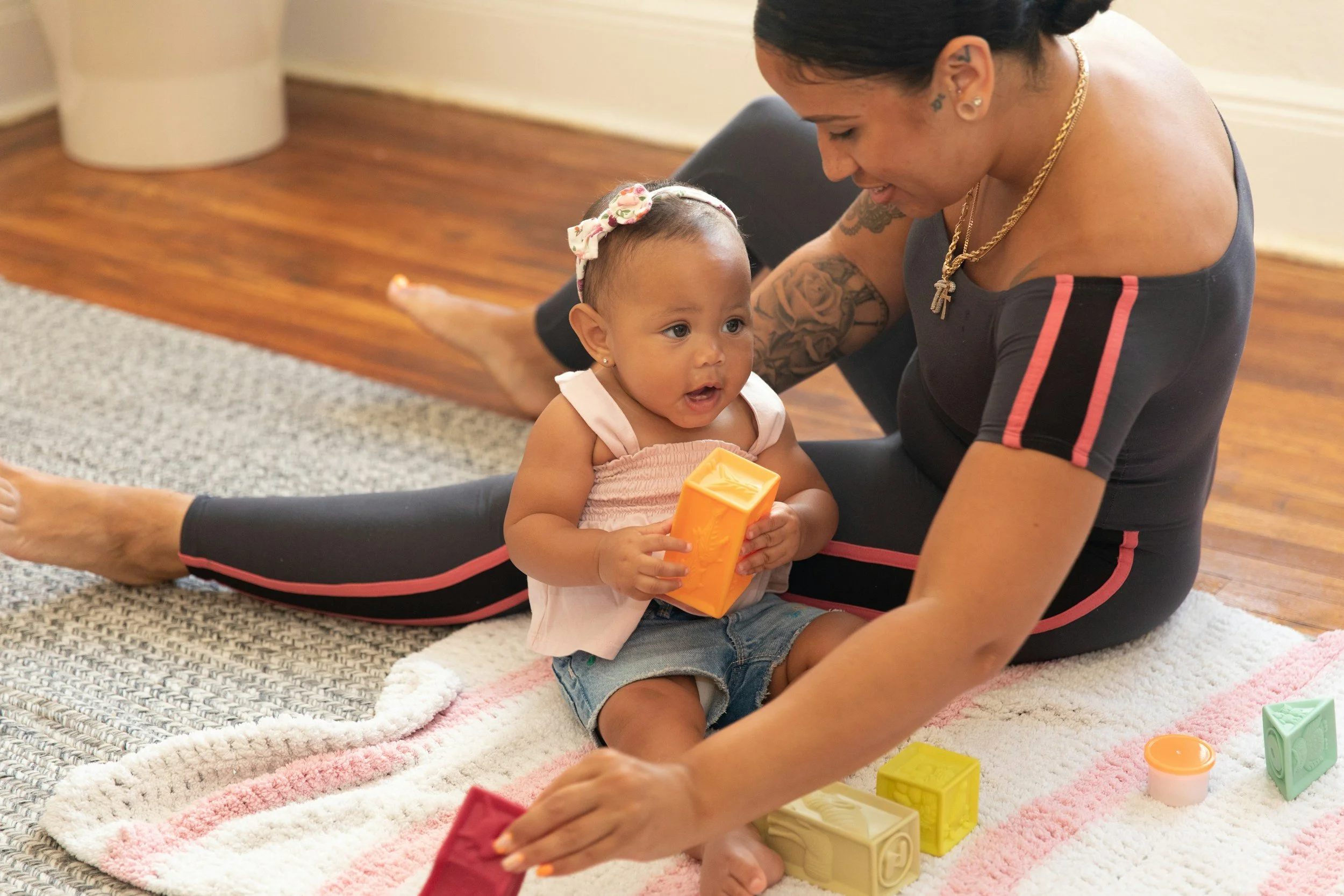
I use PC-CARE, an evidence-based model from UC Davis where I coach you in real time while you play with your child, rather than handing you techniques to attempt alone. For hitting specifically, that matters: the skills are easy to understand and hard to execute while someone small is screaming, and being coached through the executing is what changes it.
The model runs about seven weekly sessions with five minutes of daily practice between them. Parent coaching is skills work rather than psychotherapy, so I can work with caregivers anywhere in the country, not only in the states where I hold a clinical license. I don't take cases involving active litigation or high-conflict custody.
Questions parents ask me
My toddler only hits me, never their father or daycare. What does that mean?
Usually that you're the safest person in the room. Children fall apart where they can afford to. It's a backhanded compliment and you're allowed to find it annoying.
Is it normal that I wanted to hit back?
A reaction rising in you is not the same as doing it, and the parents who worry about this are reliably the ones not doing it. If the urge is strong, frequent, or frightening to you, that's worth talking about rather than carrying alone.
How long until this stops?
With consistent responses, usually weeks rather than months, though it tends to reappear during transitions — a new sibling, a move, a dropped nap. Children regress around change and then come back.
Where to start
I offer a free 20-minute video consultation. Describe what's happening and I'll tell you whether this is a developmental stage to ride out or something I could actually help with.
It's free, it's twenty minutes, and your child doesn't need to be there. I'll tell you if I'm not the right fit and I'll usually know someone who is. Send me a message to set it up.
If you're in crisis, 988 reaches the Suicide and Crisis Lifeline any hour.