

PCIT and PC-CARE come from the same research tradition and work in a similar way — a provider coaches a caregiver in real time while they play with their child. PCIT is the older, longer model, and it's mastery-based: you advance when you've demonstrated the skills. PC-CARE is brief and flexible, usually around six or seven weekly sessions. I'm Logan Brantley, MSW, LCSW, LICSW, and I'm trained in PC-CARE.
Parents mix these up constantly, and so do referring clinicians. The names are similar, the mechanics look alike from outside, and plenty of websites use them loosely. Worth being exact, since the two models suit different families.
What PCIT is
Parent-Child Interaction Therapy is the better-known of the two. It runs in two phases — a relationship-building phase first, then a discipline phase — and movement between them is gated by mastery criteria. You practice the coaching skills until you hit a defined standard, then you move on.
Because it's mastery-based, PCIT has no fixed length. It takes as long as it takes, which for most families means months rather than weeks. That's a feature of the design: the standard is the skills, not the calendar.
If you already know which model you want and you want to ask me whether I'm the right provider, send me a message. The rest of this is for people still working out which is which.
What PC-CARE is
Parent-Child Care was developed at UC Davis and built to be shorter. It's a brief dyadic intervention — roughly six or seven weekly sessions of about an hour — for caregivers and children with mild to moderate behavioral difficulties, or strain in the relationship itself.
It teaches relationship skills first and behavior management second, which is the same sequence PCIT uses and the reason both models work. That ordering is also why when gentle parenting isn't working tends to be a sequencing problem rather than a philosophy problem.
Between sessions you get Daily CARE: five minutes a day using the skills during play. Five minutes, deliberately small, because a homework plan that requires a good week gets abandoned during a bad one.
PC-CARE is listed by the National Child Traumatic Stress Network and rated by the California Evidence-Based Clearinghouse, both of which describe the research more precisely than I can summarize it.
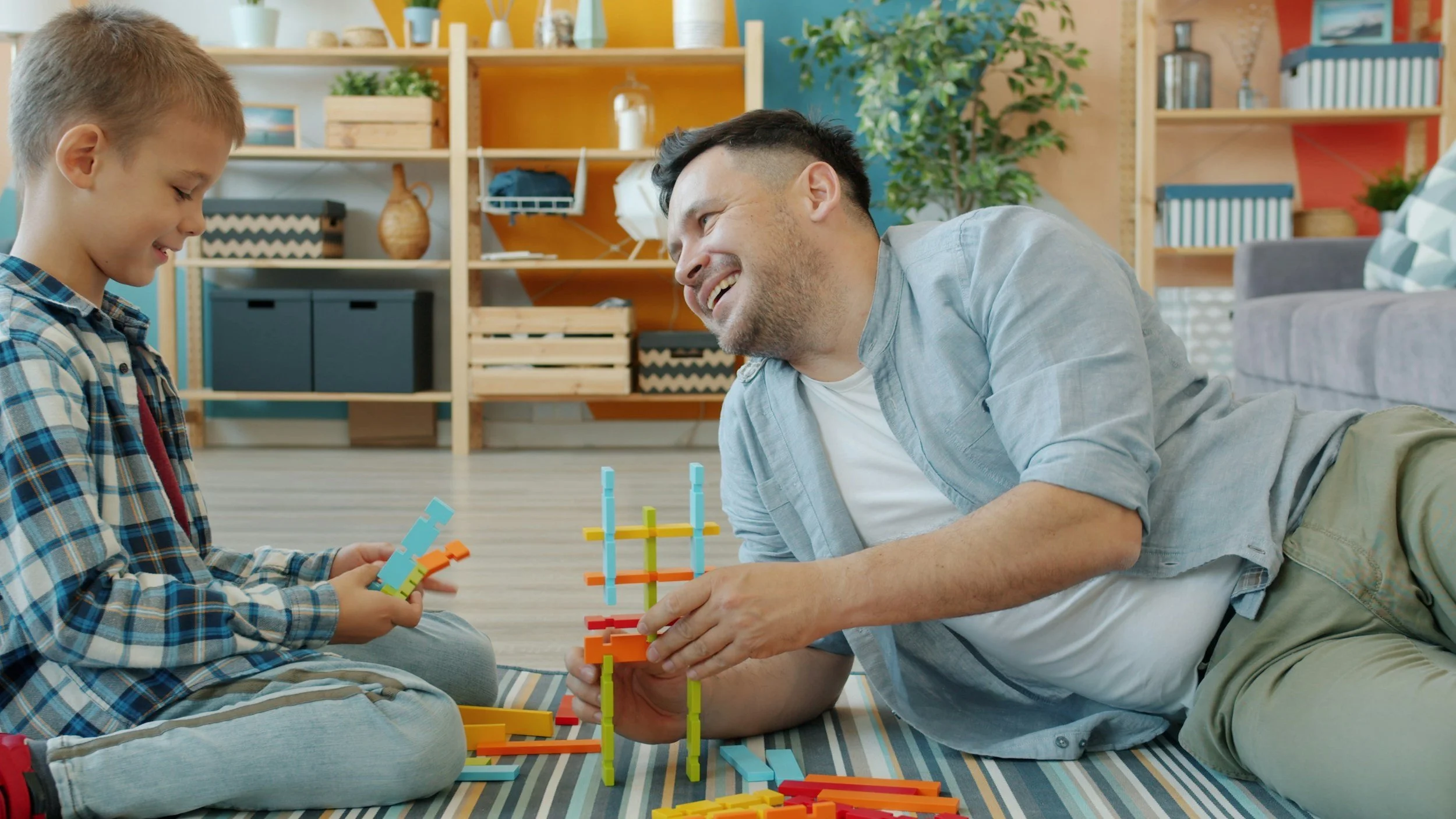
How they differ in practice
Three things matter when you're choosing.
Length and structure. PCIT keeps going until you've met the skill criteria. PC-CARE runs a set, brief course. If your schedule, insurance situation, or honest assessment of your own follow-through says a months-long protocol won't get finished, a brief model that gets completed beats a thorough one that gets abandoned in week six.
Depth. PCIT's mastery requirement produces deeper skill consolidation. That's a real advantage for families with more entrenched patterns.
Intensity of the problem. PC-CARE was designed for mild to moderate difficulty. Significant, long-standing behavioral problems are closer to what PCIT was built for.
Which one does your family need?
If the pattern is recent, specific, and moderate — hitting that started three months ago, tantrums that have gotten worse since the new baby, a household that's gotten tense — a brief model is usually the right size. If the difficulty is entrenched, has been building for years, or hasn't moved with other interventions, PCIT is probably the better fit.
I'd rather you get the right one than get me. If what you describe in a consultation sounds like PCIT, I'll say so.
What I'm trained in, and what I'm not
I completed PC-CARE Phase 1 and Phase 2 through UC Davis in 2025. I'm a licensed clinical social worker, and my training is in complex and relational trauma, Brainspotting, somatic parts-work, and expressive arts therapy.
I am not a certified PCIT provider. If PCIT is what your family needs, I'll help you find someone who is certified in it rather than stretching what I'm trained in to cover the gap.
The trauma background does change how I run PC-CARE, and this is the part I'd want you to know. The model is a parenting intervention, and most of the parents I coach are also managing something of their own — their own childhood arriving uninvited in the middle of their kid's meltdown. PC-CARE doesn't treat that. I can see it, name it, and tell you what would.
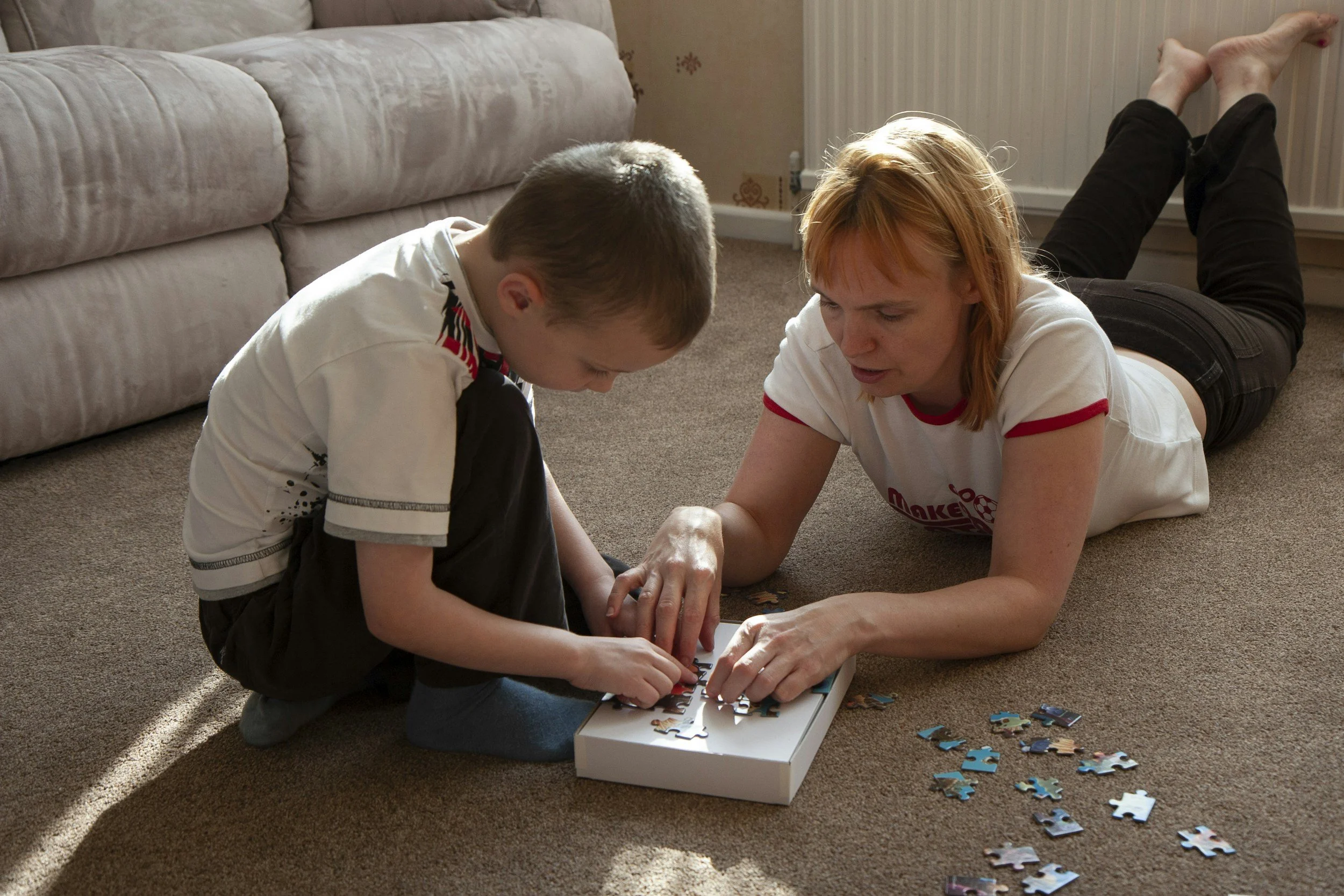
Does PC-CARE work over video?
Yes, and the telehealth version has a practical advantage. Your child plays in their own living room with their own toys, which is where the behavior you want to change actually happens. A clinic playroom is a borrowed setting.
Because parent coaching with PC-CARE is skills work rather than psychotherapy, I can work with caregivers anywhere in the country, not only in the states where I hold a clinical license.
Two situations I don't take: active court cases and active high-conflict custody disputes. Coaching in the middle of litigation tends to get used as evidence, which serves nobody, least of all the child. I work with caregivers of children roughly two and a half to five.
If you're weighing the two models and want a straight answer about which fits, that's a good use of twenty free minutes.
Questions parents ask me
Is PC-CARE just a shorter PCIT?
It's a separate model from the same research group, built deliberately for brevity and flexibility rather than trimmed down from PCIT. Different protocol, different criteria, same underlying logic about coaching parents in the moment.
My child's therapist recommended PCIT. Can I do PC-CARE instead?
Ask them why they recommended PCIT specifically. If the answer points to entrenched behavior or a need for mastery-level skill building, take their advice.
Is my child the client?
No. Nobody is diagnosing your child. I'm coaching you, with your child present, because that's where the skills get built.
Does PC-CARE count as therapy?
It's a parenting intervention delivered as skills coaching. If what's happening needs treatment — for your child or for you — I'll tell you plainly in the consultation rather than seven weeks in.
Where to start
I offer a free 20-minute video consultation. Describe what's happening at home and which model you've been told to consider, and I'll give you my honest read, including when that read is "not me."
It's free, it's twenty minutes, and your child doesn't need to be there. Nobody follows up afterward to sell you a package, because there's only me here and I don't do that. Send me a message to set it up.