


Religious Trauma Therapy in Chicago — Online Across Illinois

It’s the type of trauma that makes you question all parts of your life
Chicago is full of people who often put a little distance between themselves and the church, the community, or the family faith they grew up inside.
The distance, it turns out, only does part of the work. I'm Logan Brantley, a licensed clinical social worker at Soul Works Healing, andI provide religious trauma therapy to clients across Illinois over secure video, from Chicago and Evanston to Naperville, Rockford, and everywhere in between.
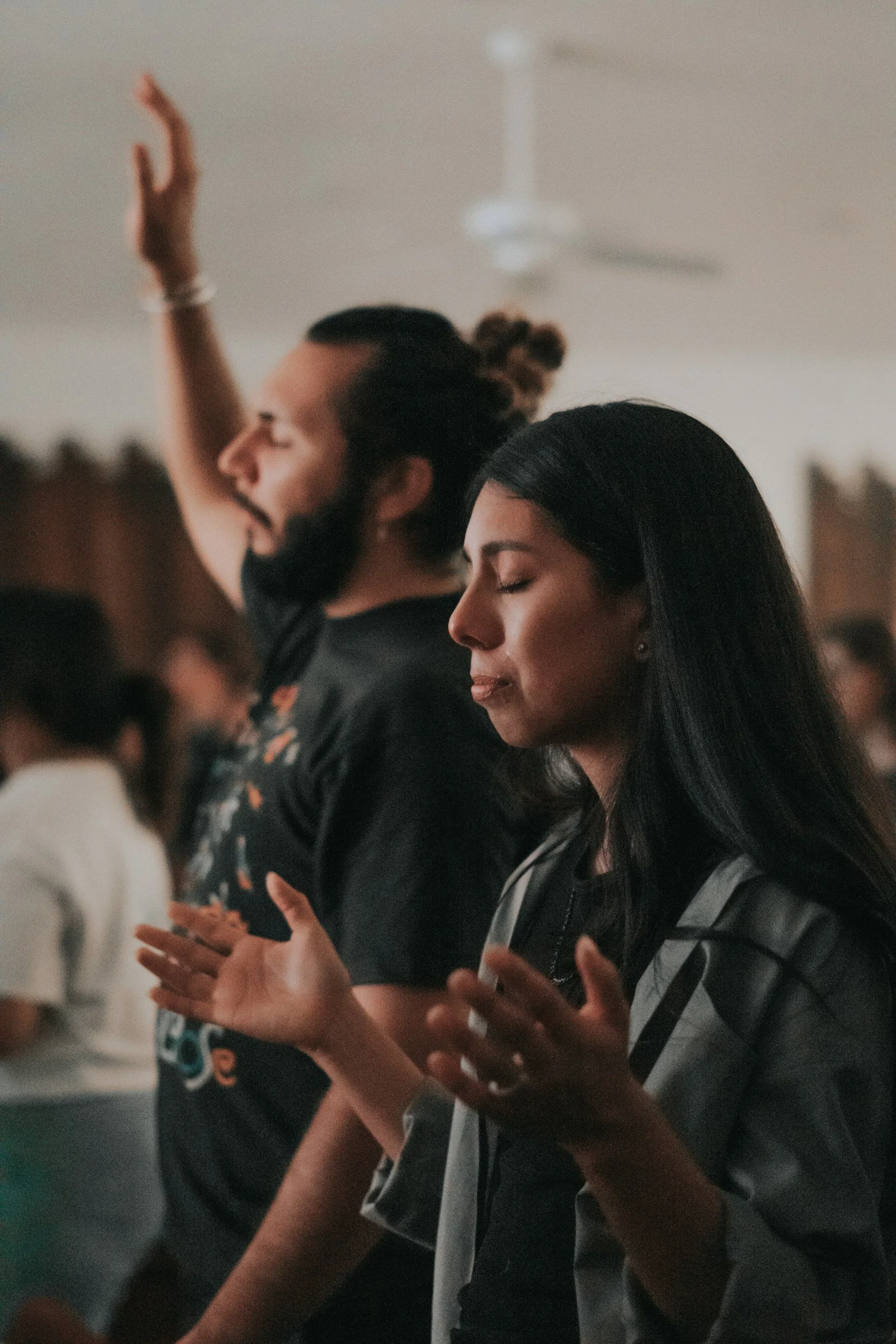
What religious trauma looks like by the time someone searches for help
Guilt that arrives without a crime. Panic after small pleasures. Difficulty making decisions without an authority to check with.
Shame about your body that outlived the beliefs that installed it, and grief for a community that was real even if the control was too.
If you want the full picture, my main religious trauma page covers what religious trauma is, the signs, and how healing works without leaving your faith — or while leaving it. The short version for this page: I hold no position on where you should land, and you won't be steered.
How I work with religious trauma
Religious trauma tends to live in the body, in the internal voice that still speaks doctrine, and in language itself — for many people, the words for meaning and goodness were the same words used to control them.
My work runs through somatic parts-work, Brainspotting, and expressive arts, which lets you process in image and movement when the old vocabulary is part of the wound. Sessions are weekly, over secure video, at a pace your system sets.
Why online therapy works for this — in Chicago and throughout Illinois

-
Religious trauma carries a specific privacy problem: in many communities, being seen walking into a therapist's office is itself a risk, and the therapists in your neighborhood may share pews with your family. Video sessions from your own space remove both problems. It also means your location in Illinois stops mattering — clients in Rockford, Springfield, or a small town where the church is the town get the same access as someone in Lakeview.
And if you leave Illinois someday, there's a reasonable chance I'm licensed where you're going. I hold licenses in six states — Illinois, California, Texas, Virginia, Maryland, and Washington, D.C. — so a move within them doesn't end the work, which most online therapists can't offer.
-
Religious trauma sits inside the center of my practice: complex and relational trauma, and the specific work of reconciling who you are with who you were raised to be. The training behind it: somatic parts-work through The Embody Lab, accredited Brainspotting, doctoral-level expressive arts, an Embodied Social Justice Certificate, and the mind-body coursework I teach graduate clinicians at Bastyr University.
Questions people ask
-
No — I work entirely over secure video with clients anywhere in Illinois. For religious trauma specifically, many clients prefer it: sessions happen from your own space, on your own schedule, without anyone seeing you walk in anywhere.
-
Neither, and I mean that. People finish this work devout, agnostic, atheist, and undecided. My job concerns how a system treated you and what it taught you about yourself, and the destination stays yours.
-
Yes — anywhere in Illinois, and also in California, Texas, Virginia, Maryland, and Washington, D.C. If you move between those states, we keep working.
-
I'm out-of-network by design, with equitable three-tier pricing: $160, $200, or $250 per session — you choose the tier that is sustainable for you. I provide superbills and partner with Thrizer to make reimbursement easier, and the first consultation is free.
-
You've probably spent years managing this quietly — measuring what's safe to say around family, around church, even around friends who deconstructed louder or faster than you did. A free 20-minute video consultation is a place to say it plainly and see how that feels. No commitment, no doctrine, no grade.